

Colorful Ceramic Serving Bowl Review: Handmade Picks Compared
Last Updated: November 1, 2026
Quick Summary
A colorful ceramic serving bowl is a handmade piece that holds food and sits on the table as a visual feature, with each bowl wheel-thrown and finished by hand. Brilliantbluejay's bowls are made from a stoneware and porcelain mix and fired to cone 6. Choose a bowl by matching its width and depth to the food you serve most.
- Bowls are wheel-thrown and finished by hand, so small variations in form and glaze are part of each piece.
- The collection's glazes run from warm caramel and cream to soft blue and striped combinations.
- The large striped bowl measures 7.75 inches wide and 4.5 inches tall and is handwash only.
- The Seashell Ruffled Bowl measures 9 inches across and 2 inches tall, weighs 1.75 pounds, and is one of a kind.
- Wide, shallow bowls suit salad and fruit, while deeper bowls suit pasta and soup.
Table of Contents
- What Makes a Colorful Ceramic Serving Bowl Worth Choosing
- Stoneware and Porcelain Mix: How the Clay Shapes the Bowl
- Side-by-Side Review of Five Brilliantbluejay Serving Bowls
- Size, Capacity and Fit: Choosing the Right Bowl for Your Table
- Caring for Your Handmade Bowl: Washing, Handling and Use
- Choosing Your Next Bowl From the Brilliantbluejay Collection
- Frequently Asked Questions
What Makes a Colorful Ceramic Serving Bowl Worth Choosing
A colorful ceramic serving bowl does more than hold food. It sits on the table, catches the light, and gets picked up and turned over in the hand before anyone starts serving. At brilliantbluejay pottery, we think the experience of seeing, holding, and using a piece matters as much as its glaze.
The bowls in our collection share a few qualities. Each one is wheel-thrown and finished by hand, so small variations in form and glaze are part of the piece rather than flaws. Glaze color runs from warm caramel and cream to soft blue and striped combinations.
When comparing options, look past the photo. Ask how the bowl feels in your hands, how deep the well is for salads or pasta, and whether the glaze suits the food you cook most often. A bowl that looks striking on a shelf but feels awkward to lift at the table will not get used much.
Stoneware and Porcelain Mix: How the Clay Shapes the Bowl
Most of our serving pieces are made from a stoneware and porcelain mix. We usually work with a very low grog, fine clay body, and we occasionally use a low grog stoneware. When a piece is made from the stoneware version, we indicate it on the piece.
The clay matters for daily use. Texture is part of the experience of these pieces, and the sensory feel of a piece is as important to us as its glazes.
All of our work is fired to cone 6.
Side-by-Side Review of Five Brilliantbluejay Serving Bowls
These five bowls cover a range of sizes, glazes, and forms.
| Bowl | Price | Best For |
|---|---|---|
| Large ceramic serving bowl in multicolor stripes and tones | $55.00 | Salads and everyday serving |
| Serving Platter/Bowl with Flower Glaze Design | $50.00 | Fruit, appetizers, and display |
| Large Display Bowl - Rust Edge | $85.00 | Centerpieces and larger spreads |
| Seashell Ruffled Bowl | $100.00 | Display, or light serving with movement |
| Cream and Gold Pedestal Bowl | $100.00 | Fruit and decorative objects |
Large Ceramic Serving Bowl in Multicolor Stripes and Tones
This is the bowl most people reach for first when they need something for salad or everyday serving. It has deep, softly curved sides and a combination of shino glazes with darker tones on top. The interior carries a buttery shino glaze. At 7.75 inches wide and 4.5 inches tall, it is a large bowl for serving or display. Handwash only is recommended.
You can browse the striped large bowl and see its full details on our site.

Seashell Ruffled Bowl and the Flower Glaze Serving Bowl
The Seashell Ruffled Bowl is a wide, shallow piece. The edge is hand-shaped into a soft ruffle, and the glaze moves from a warm caramel-brown rim into cream, with a pool of soft blue across the center. It is a striking piece as a display bowl, or useful for serving where you want something with a bit of movement to the form. It measures 9 inches across and 2 inches tall and weighs 1.75 pounds. Each piece is one of a kind.
The Serving Platter/Bowl with Flower Glaze Design is priced at $50.00.
The Large Display Bowl - Rust Edge is wide and shallow, priced at $85.00. The Cream and Gold Pedestal Bowl is priced at $100.00 and measures 8.5 inches wide and 6 inches tall.
Size, Capacity and Fit: Choosing the Right Bowl for Your Table
Most shoppers pick a serving bowl by photo and regret it at the table. The fix is to work backward from what you serve and how many people you feed, then match diameter, depth, and form to that job. The notes below are the practical guidance we give when someone asks which bowl to start with.
Start with the dish, not the diameter
Different foods need different bowl geometry. A wide, shallow well lets you toss and dress salad without ingredients climbing the sides. A deeper, curved well keeps pasta and saucy dishes contained when you stir or serve with tongs. A low, broad form is best for fruit, bread, and shared appetizers because it spreads the food out and lets color show. Soup wants a deeper bowl with a stable foot so a ladle does not tip it.
As a rule of thumb:
- Salad for four: a bowl roughly 9 to 11 inches across and 3 to 4 inches deep gives room to toss without overflow.
- Pasta for two to three: a deeper bowl around 8 to 9 inches across and 3.5 to 4.5 inches deep holds sauce and keeps heat in.
- Fruit or bread for a crowd: a wide, shallow bowl 10 to 12 inches across and 2 to 3 inches deep reads as a centerpiece and lets you pile high.
- Soup or individual servings: a deeper, narrower bowl with a foot, around 6 to 7 inches across, is easier to hold and less likely to slosh.
Match the form to the table and the shelf
Diameter and depth work together, but so do height and footprint. Pedestal forms add vertical presence, which helps a fruit arrangement stand out, but they take up more cabinet height and are harder to store stacked. Wide, shallow display bowls look generous on a table but need a clear, flat surface and are awkward on a crowded counter. Ruffled and organic rims add movement and catch light, but they reduce usable interior volume slightly compared with a clean-rimmed bowl of the same diameter.
Large ceramic serving bowl in multicolor stripes and tones →
Measure three things before you order: the open space on your table or buffet, the interior height of the shelf or cabinet where the bowl will live, and the reach from your seat to the center of the table. A bowl that is beautiful but out of reach will not get used.
Account for handmade variation
Every piece is wheel-thrown and finished by hand, so dimensions vary slightly from bowl to bowl. The measurements on each product page are the best guide we can give, and they reflect the piece you are ordering rather than an average. If a bowl is listed at 7.75 inches wide and 4.5 inches tall, expect small differences in wall thickness and rim height that come with hand work. That variation is part of the piece, not a defect, but it does mean you should leave a little clearance in tight spaces.
Capacity in practical terms
We do not publish fluid-ounce capacities because hand-thrown bowls vary and because most people judge serving size by look and feel rather than by volume. A more useful approach is to think in servings: a wide 10-inch bowl typically holds a generous salad for four to six, while a 7- to 8-inch bowl suits a side salad or pasta for two. If you regularly entertain, a wide display bowl plus a deeper everyday bowl covers most occasions better than one compromise piece.
Caring for Your Handmade Bowl: Washing, Handling and Use
Handmade stoneware and porcelain is durable, but it is not indestructible, and the habits that keep a bowl looking new for years are simple once you know them. This section covers washing, heat, thermal shock, chips, and glaze care so you can use the bowl every day without worrying about it.
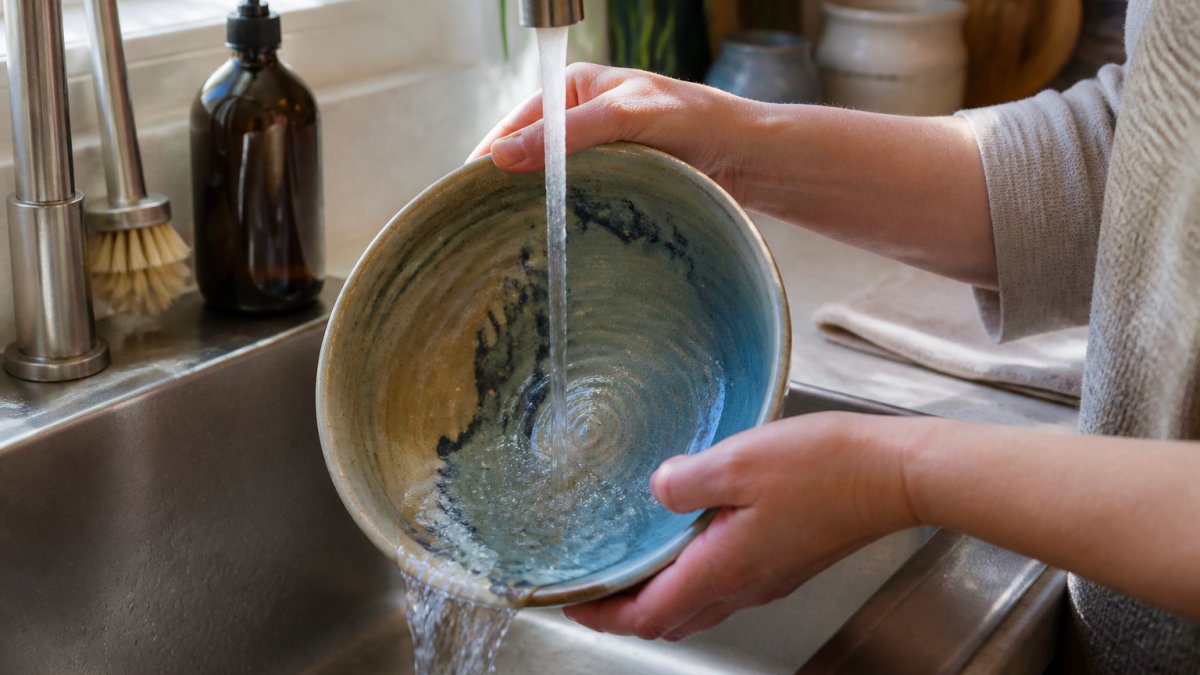
Washing: handwash is the safe default
Our bowls are handwash only. Letting acidic or oily food dry on the glaze makes cleaning harder over time and can dull the surface. Avoid abrasive scouring pads and harsh cleansers, which can scratch glaze and leave a cloudy film. If something sticks, soak the bowl in warm water for a few minutes and use a soft sponge or nylon brush.
When in doubt, handwash.
Heat: microwave, oven, and thermal shock
Sudden temperature changes are the most common cause of cracks in any ceramic. Let a bowl come to room temperature before filling it with something very hot or very cold, and never move it straight from the refrigerator to a hot oven or from a hot oven to a cold counter.
Check the product page for the specific piece before using it in the microwave.
Do not use a serving bowl for baking unless the product page says it is oven safe, and never use a bowl under a broiler.
Handling: rims, ruffles, and stacking
Lift wider and shallower bowls with both hands, especially when they are full. Avoid stacking heavy pieces on top of ruffled or thin-rimmed bowls, and set bowls down on a towel or trivet when you move them from the sink to the table. Store bowls with a soft cloth or felt pad between stacked pieces to protect the glaze.
Chips, crazing, and glaze care
Retire any piece with a chip on a food-contact surface, and treat hairline cracks the same way.
If a crazed surface is on a food-contact area and you are concerned about hygiene, reserve that piece for display or dry use. To keep glaze looking its best, wash promptly, avoid harsh chemicals, and do not scrub with metal tools.
Choosing Your Next Bowl From the Brilliantbluejay Collection
Pick the bowl that matches how you will use it most often. The striped large bowl is one option for everyday serving. For a centerpiece or a bowl that will mostly sit on display, the Seashell Ruffled Bowl or the Rust Edge display bowl makes a stronger statement. For fruit and decorative objects, the pedestal and flower glaze pieces are worth a look.
If you are still deciding, look through our full range of bowls to compare what is available now. Each piece is made by hand, and the one you choose is one of a kind.
Frequently Asked Questions
What should I look for in a ceramic serving bowl?
Start with size and use. Check the clay body, since the stoneware and porcelain mix used here is sturdy for everyday use. Look at the glaze, as glossy interiors are easier to wipe clean than heavily textured ones. Finally, consider weight: a bowl that feels comfortable to lift when full matters as much as how it looks on the shelf.
Are ceramic serving bowls safe for serving food?
The pieces in this collection are fired to cone 6. Avoid using a bowl with visible chips for food.
How do you care for handmade ceramic bowls?
Most of these bowls are handwash only, so use warm water and a soft sponge rather than abrasive pads. Avoid sudden temperature changes, such as moving a hot bowl directly under cold water.
What size serving bowl is best for a salad?
For a family-sized green salad, a bowl about 9 inches across and 3 to 4 inches deep gives enough room to toss without spilling. The Seashell Ruffled Bowl measures 9 inches across and 2 inches tall. Measure your own serving needs before choosing, since a wide, shallow bowl and a deep bowl of the same diameter hold very different amounts.
