

How Do You Care for Handmade Pottery?
Last Updated: October 30, 2026
Quick Summary
Handmade pottery care starts with knowing your piece: wash stoneware and porcelain by hand with mild soap, warm water, and a soft cloth, then dry fully. Skip abrasive cleaners and scouring pads, and always check the maker's note before dishwashing, microwaving, or oven use.
- We fire our stoneware and porcelain to cone 6, a mid-range firing temperature.
- Never leave pottery soaking overnight, since moisture can work into unglazed feet and rims.
- Place oven-safe pieces in a cold oven and heat both together to avoid thermal shock.
- Lift coffee and tea stains with a paste of baking soda and water, then rinse.
- Put a soft cloth or felt pad between stacked plates and keep stacks three or four pieces deep.
Table of Contents
- Start With the Clay Body and Glaze
- How to Clean Handmade Pottery Without Damaging It
- Are Handmade Mugs Dishwasher Safe?
- Can Handmade Pottery Go in the Oven?
- How to Remove Stains From Ceramic Mugs
- Storing and Handling Pottery So It Lasts
- Caring for Metallic, Luster, and Delicate Surfaces
- Pick a Piece Meant for Daily Use
- Frequently Asked Questions
Start With the Clay Body and Glaze
How do you approach handmade pottery care? You start by knowing what it is made of. Handmade pottery care begins with the clay body and the glaze, because those two things decide how a piece handles heat, water, and daily use. At brilliantbluejay pottery, pieces are wheel-thrown stoneware or porcelain, so the care advice below is built around those clays rather than generic rules.
A clay body is the blend of clay and minerals a potter throws with. To see how those choices add up, read a guide to one of a kind handmade pottery. It sets the piece's density, weight, and how it reacts to temperature swings. For the glaze side of the equation, see how to choose pottery glaze colors.
We primarily work with a stoneware and porcelain mix, usually a very low-grog fine blend. Grog is fired clay ground up and added for texture and strength. A fine, low-grog mix gives a smooth surface that feels good in the hand.
Stoneware, Porcelain, and Earthenware
Stoneware is a dense clay body. Porcelain is a finer clay body.
What Cone 6 Firing Means for Daily Use
Cone 6 is a mid-range firing temperature. We fire to cone 6, the temperature our stoneware and porcelain pieces are made to.
How to Clean Handmade Pottery Without Damaging It
Cleaning handmade pottery is simple: wash it by hand with mild soap, warm water, and a soft cloth, then dry it. Skip abrasive cleaners and scouring pads. They dull glaze and scratch the surface over time.
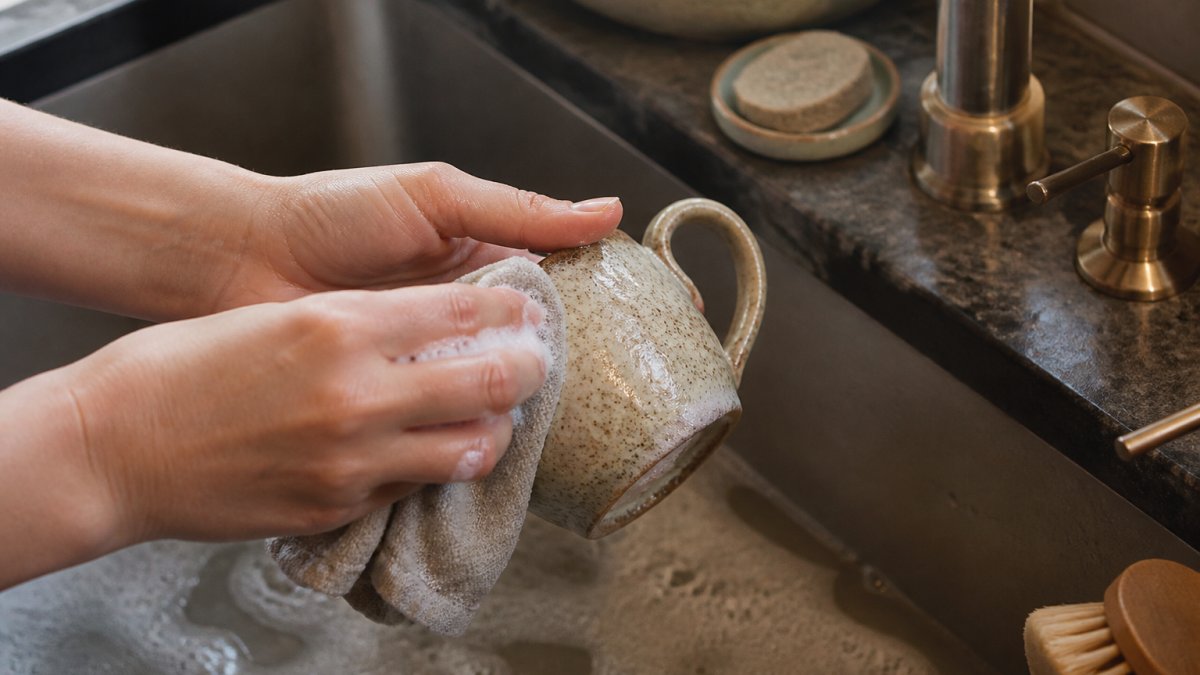
Here is the routine we recommend:
- Use a few drops of mild dish soap in warm water
- Wipe with a soft cloth or non-scratch sponge
- Rinse well and dry with a microfiber cloth
- Let pieces air-dry fully before stacking
Watch out: leaving a piece soaking in the sink overnight is a common mistake. Prolonged soaking can work moisture into unglazed feet and rims.
Are Handmade Mugs Dishwasher Safe?
The honest answer is that it depends on the piece, and the only reliable source is the maker. A mug that survives the dishwasher is not the same as a mug that is dishwasher safe, repeated cycles do slow damage that shows up months later as a dulled glaze, a chalky film, or a worn rim. If you want to skip the guesswork, browse mugs and cups made for daily use.
Here is how to think it through rather than guess.
What the Dishwasher Actually Does to Pottery
Three things happen inside a dishwasher that do not happen at the sink:
- Sustained heat. Wash and rinse water plus the drying cycle push a piece through repeated warm-to-hot swings. The glaze is often what takes the wear.
- Harsh detergent. Dishwasher detergents are more alkaline and more abrasive than hand dish soap. Over time they can etch a glaze, especially a satin or matte finish, and dull metallic or luster decoration.
- Mechanical contact. Racks, tines, and neighboring dishes knock rims and handles. Most chips in handmade pottery come from contact, not heat.
How to Tell If Your Piece Is Dishwasher Safe
Appearance alone cannot confirm it. A glossy glaze is not a safety rating. Use these checks:
- Look for the maker's note. Potters who rate a piece for the dishwasher usually say so on the piece, on a card, or on the listing. If there is no note, assume handwash.
- Check the foot and rim. Unglazed clay on the foot ring or rim is exposed to water and detergent on every cycle. Exposed clay is the first place a dishwasher does damage.
- Inspect the decoration. Gold luster, decals, and metallic rims are thin surface layers and should never go in the machine, even when the clay body underneath is durable.
- Ask the maker. A short message to the potter is faster than replacing a mug. Most makers are glad to answer.
When Handwashing Is the Only Safe Option
Keep these out of the dishwasher entirely:
- Anything with gold luster, metallic glaze, or decals
- Pieces with unglazed decorative texture, carved rims, or applied handles
- Earthenware
- Any piece the maker has not rated for machine washing
Can Handmade Pottery Go in the Oven?
Handmade pottery can go in the oven only if it is stoneware or porcelain rated for it, and only with gradual heating. Sudden temperature change, called thermal shock, is what cracks pots. A cold dish into a hot oven is the classic way to lose a piece.
Our approach:
- Place the piece in a cold oven, then heat both together
- Avoid broiler use and direct stovetop contact
- Never move a hot piece onto a cold counter or into water
- Let it cool slowly inside the oven
We would not put earthenware in the oven. When in doubt, treat a piece as decorative for oven use.
How to Remove Stains From Ceramic Mugs
Stains on ceramic mugs usually come from coffee, tea, or tomato, and most lift with a paste of baking soda and water. Rub it on gently with a soft cloth, let it sit, then rinse. Avoid bleach and harsh scouring powders, which can etch glaze.
Utensil Marks and Mineral Deposits
Gray utensil marks are metal rubbed onto the glaze, not scratches in it. A baking soda paste usually removes them. White mineral deposits, often from hard water, respond to a mild vinegar-and-water wipe followed by a thorough rinse. Do not leave vinegar sitting on the glaze.
Storing and Handling Pottery So It Lasts
Most damage to handmade pottery does not come from washing. It comes from the small collisions of daily life: a rim set down too hard, a stack that shifts, a hot mug on a cold counter. Handling is a skill, and it is worth a minute of attention because a chip cannot be undone.
Why Chips and Cracks Happen
Ceramic is strong in compression and weak in tension. A piece tolerates weight pressing down on it far better than it tolerates a sharp knock on a rim or a sudden pull on a handle. That is why the rim and the handle junction are where most breakage starts. A hairline crack that looks cosmetic can run through the wall of a mug and let liquid reach unglazed clay, which is when a piece stops being safe for food or drink.
Stacking Without Damage
- Put a soft cloth, felt pad, or paper napkin between stacked plates and bowls
- Never stack a heavy piece on a delicate rim, invert bowls so weight sits on the foot
- Keep stacks shallow; three or four pieces is plenty
- Do not hang mugs by the handle for long storage, since the handle bears the full weight
Carrying and Using
- Use both hands for a full mug or a wide bowl; one-handed carries are where drops happen
- Carry one piece at a time when it is full
- Set pieces down on wood, cloth, or a mat rather than bare stone or metal counters
- Keep hot pieces off cold surfaces and cold pieces out of hot water, thermal shock is the quiet cause of many cracks
Storing Decorative Pieces
Decorative pieces still collect dust. A dry microfiber cloth is enough for most surfaces; a soft brush reaches carved texture. Keep decorative pieces out of damp basements and off windowsills that swing between hot and cold, since repeated moisture and temperature swings stress glaze over years.
A Care Guide by Use Case
| Piece and use | Handwash | Dishwasher | Microwave | Oven | Watch for |
|---|---|---|---|---|---|
| Stoneware or porcelain, plain glaze, daily use | Yes | Gentle cycle, rarely | Usually yes | Cold-start only | Glaze dulling over time |
| Stoneware or porcelain, decorative only | Yes | No | No | No | Dust in texture |
| Metallic, luster, or decal finish | Yes only | No | No | No | Abrasion and acid dulling |
| Earthenware | Yes | No | Check maker's note | No | Crazing and staining |
| Any piece with a chip or hairline crack | Retire from food use | No | No | No | Liquid reaching unglazed clay |
At brilliantbluejay pottery, we throw every piece in small batches with glazes that echo abstract landscapes. That means natural variation in every mug and bowl, and care that respects the surface. Browse bowls made for everyday use to start building a collection you will actually reach for.
Caring for Metallic, Luster, and Delicate Surfaces
Metallic and luster finishes need gentle care. Wash them by hand with a soft cloth.
Keep metallic pieces out of the microwave and dishwasher entirely. Acidic foods and harsh detergents can dull the shine over time.
Pick a Piece Meant for Daily Use
Stoneware and porcelain fired to cone 6 are made for daily use. When a piece is made to be used, care becomes a habit rather than a chore.
| Piece Type | Handwash | Dishwasher | Oven | Microwave |
|---|---|---|---|---|
| Stoneware, plain glaze | Yes | Gentle cycle, rarely | Cold-start only | Usually yes |
| Porcelain | Yes | Gentle cycle, rarely | Cold-start only | Usually yes |
| Metallic or luster | Yes only | No | No | No |
| Earthenware | Yes | No | No | Check maker's note |
At brilliantbluejay pottery, we throw every piece in small batches with glazes that echo abstract landscapes. That means natural variation in every mug and bowl, and care that respects the surface. Browse bowls made for everyday use to start building a collection you will actually reach for.
Frequently Asked Questions
What is the golden rule for pottery care?
Avoid sudden temperature changes. A handmade piece that moves from a hot oven to a cold counter, or from a freezer to a preheated oven, can crack from thermal shock even when the clay body is sturdy. Let pieces cool and warm gradually, and always place pottery in a cold oven rather than a hot one. Gentle handling and gradual heating protect a piece far more than any cleaning product.
How should handmade pottery be stored?
Stack bowls and plates with a soft cloth, felt pad, or paper towel between each piece so glazes do not rub against each other. Store mugs by the handle, not stacked rim to rim, and keep heavier pieces on lower shelves. For decorative pottery, a dust-free cabinet or shelf away from direct sun keeps glazes looking their best. Use both hands when carrying anything larger than a mug.
Are handmade mugs dishwasher safe?
It depends on the piece. Handwashing with mild soap and a soft cloth is always the safest choice. Skip the dishwasher for anything with metallic luster, delicate surface decoration, or a low-grog stoneware body. When in doubt, wash by hand and dry with a soft cloth.
Can handmade pottery go in the oven?
Some can, but not all. The glaze and decoration matter as much as the clay. Place the piece in a cold oven, let it heat gradually with the oven, and never use it under a broiler or on a stovetop. Check with the maker before baking in any handmade piece.
Caring for handmade pottery comes down to a few steady habits: gentle washing, gradual heat, and handling with care. If you want pieces made to be used and loved daily, brilliantbluejay pottery throws stoneware and porcelain in small batches with glazes that bring color to every room. Get started with brilliantbluejay pottery and find functional art that fits your everyday routine.
